
"arabica plantations"
3000 article(s) found

Papua New Guinea Coffee _ Paradise Bird Coffee Bean flavor description _ how much is a cup of Paradise Bird Coffee
Professional coffee knowledge exchange more coffee bean information please follow Coffee Workshop (Wechat official account cafe_style) 01 | production area profile Papua New Guineans regard the beautiful bird of paradise as a bird of freedom and joy, a gift from the gods. PNG AA Sigri Manor Arabica Coffee, like the migration of birds, is a long journey from the Blue Mountain Iron Card of Jamaica to Babu.

Introduction of Coffee Plantation in Taiwan Coffee producing area
In 2006, thousands of coffee trees shipped from Taiwan officially settled on a hillside in the town of Gaoyao Xiaoxiang. Our boss is from Taiwan, and he and his family are very fond of growing coffee trees. when he came to Zhaoqing to develop the electronics industry, he specially brought high-quality Arabica coffee trees from Taiwan and planted them in the hot land of Zhaoqing. Talking about the original intention of planting coffee trees

Introduction to the characteristics of the aromatic Ecuadorian Coffee Manor producing area
Ecuador is the highest Arabian coffee plantation in the world. The Arabian Coffee Tree was first introduced to Ecuador in 1952 and its coffee is of good quality, especially the coffee harvested in early June. Ecuadorian coffee beans can be divided into two varieties: Galapagos and Gigante, both of which have the characteristics of large particles, heavy weight, balanced acidity and rich aroma. Er

Panamanian Coffee Flavor and Taste introduction to Caisan Louis Manor Baru Volcano
There are three ways of plantation: sunshine plantation, full shade plantation and semi-shade plantation. Plantations with more than 50 plants per hectare are fully shaded plantations, 25-50 plants are semi-shaded plantations, and less than 25 plants are called sunshine plantations. What is the effect of shading and shading on coffee in the plantations of the two neighbors with the same planting conditions? Shade plantations can slow down coffee

Characteristics of Ecuadorian coffee beans Ecuadorian coffee producing areas
St. Cristobal is a larger island in the Galapagos archipelago. At 410m above sea level, there is a small lake called El.Junco, which forms streams along the rocks and volcanic rocks on the southern slope of the island. Mineral-rich fresh water moistens the land of St. Cristobal, keeping the soil moist and fertile. For here.

Sweet and light Colombia coffee plantation Flavor Taste Introduction Hope Manor
Colombia is rich in products, especially coffee, flowers, gold and emeralds known as the four treasures. Coffee was first introduced to Colombia in 1808 by a priest from the French Antilles via Venezuela. Today the country is the second largest coffee producer after Brazil, the world's largest exporter of Arabica coffee beans and the world's largest exporter of washed coffee beans. Colombia

San Cristobal Galapagos Coffee
As coffee is consumed around the world, the world coffee industry moves toward mass production, and San Cristobal's smaller and less reliable coffee industry is in trouble and may eventually be forced to give up without profit. It wasn't until the early 1990s that the Gonzalez family bought Hassenda Coffee Plantation. Humboldt Curr
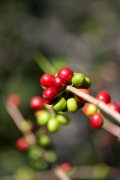
Picking coffee beans planting coffee beans in imported coffee producing areas
Most Arabica coffee beans mature from June to August and Roberts coffee beans from September to October. Therefore, although in some countries where the dry and wet seasons are not obvious, such as Colombia and Kenya, there are two flowering periods a year, that is, two harvests, strictly speaking, only once a year. Of course, the harvest time varies from region to region. South of the equator, such as Brazil

Introduction to Hasunda Coffee Garden in Ecuador
In 1875, 340 years after Freitoma de Belanga discovered the island, an indigenous man named Kovos came to St. Cristobal Island, where he established the Hasunda Coffee Garden and planted about 100 hectares of Arabian bourbon coffee trees. Since the plantation is located between 140m and 275m above sea level, the climate is equivalent to that of 915m ~ 1830 m in the interior.

The clean and fresh fruit flavor of Caesar Louis Manor in Bogut, Panama.
There are three ways of plantation: sunshine plantation, full shade plantation and semi-shade plantation. Plantations with more than 50 plants per hectare are fully shaded plantations, 25-50 plants are semi-shaded plantations, and less than 25 plants are called sunshine plantations. What is the effect of shading and shading on coffee in the plantations of the two neighbors with the same planting conditions? Shade plantations can slow down coffee

The Development History of Indonesian Coffee
Indonesia has always been one of the best coffee producers in the world. Java coffee used to be synonymous with top coffee, while Sumatra and Sulawesi are also rich in top coffee.

Fresh and bright taste Ethiopian coffee plantation flavor Taste characteristics Variety introduction
Ethiopia is the birthplace of the famous Arabica coffee beans, and people have maintained the tradition of harvesting wild coffee beans. The coffee garden with an altitude of more than 1500 meters has formed a unique coffee terroir after more than a thousand years of evolution and adaptation. Ethiopian coffee grown in the natural wild environment is called wilderness coffee and retains the most primitive coffee beans.
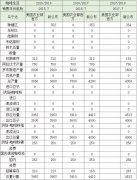
Annual report on Ugandan Coffee 2017
The report stresses that Nairobi forecasts a small increase in Ugandan coffee production in 2017 / 2018 as a result of the harvest of newly mature coffee from the plantation. Exports are expected to remain stable, leading to a small increase in clearing inventories. The Uganda Coffee Development Authority (UCDA) continues to implement a funding scheme from the Government of Uganda (GOU), which aims to increase improved varieties and expand acreage.

World Map of Coffee beans-- introduction of 53 coffee producing areas in the world
twenty-one. Venezuela oil was once considered the main export of Venezuela (Venezuela). Although coffee trees were introduced from Martinique in 1730 and Venezuela, coffee production was almost abandoned at the height of the oil industry. Recently, coffee plantations have begun to recover, with original Tipica and bourbon coffee trees and new plantations
The producing area of boutique coffee Ecuador
Ecuador Coffee Coffee Origin: the Ecuadorian Arabica Coffee Tree was first introduced to Ecuador (Ecuador) in 1952 and its coffee quality is very good, especially the coffee harvested in early June. Ecuadorian coffee beans can be divided into two varieties: Galapagos and Gigante, both of which have the characteristics of large granules and heavy weight. Ecuadorian coffee can be classified according to its quality.
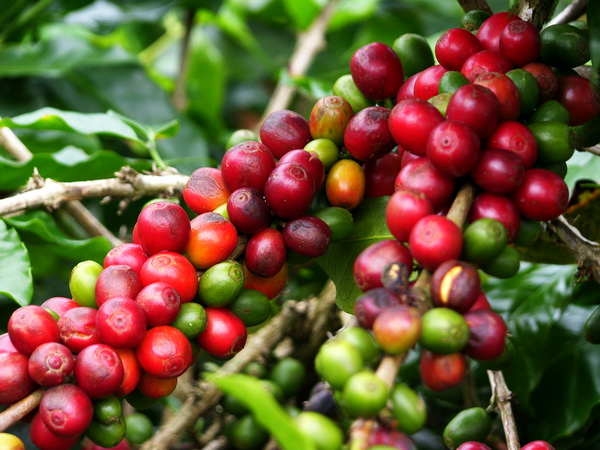
Experience plantation amorous feelings Tanzania Arusha Coffee Manor Africa original Tanzania imported coffee
Due to political instability and rampant diseases and insect pests, the coffee industry in Tanzania has been damaged, leading to a decline in the overall level of coffee and instability in quality, which in turn lead to lower prices, which are usually the result of a further decline in the coffee industry. What's more, it is estimated that more than 12% of the Arabica coffee grown in northern Tanzania from 1969 to 1985 has gone.

Panamanian Coffee introduction A brief introduction to the cultivation of Panamanian Coffee Manor Jade Manor
Boquet green green raw beans, high moisture content, beans are soft beans, so good heat transmission, so there is no need to worry about uneven baking, aroma and taste are excellent, smooth taste, dark chocolate, nutty aroma, high alcohol thickness, low acidity, long-lasting. There are three ways of plantation: sunshine plantation, full shade plantation and semi-shade plantation. More than 50 plants per hectare
Ill-fated Indonesian coffee
Indonesia has always been one of the best coffee producers in the world. Java coffee used to be synonymous with top coffee, while Sumatra and Sulawesi are also rich in top coffee.

Does Australia produce coffee beans _ coffee bean flavor in Australia _ does Australian coffee taste good
Professional coffee knowledge exchange more coffee bean information please follow the coffee workshop (Wechat official account cafe_style) Australia (Australia) well-known representative coffee: Australian coffee Australia began to grow coffee around 1900, both Robusta and Arabica species, mainly in eastern Australia, roughly distributed in New South Wales (New So)

Colombia Coffee Plantation Flavor Description Taste Variety Introduction
Colombia coffee plantation flavor description taste varieties production area introduction in the past 12 to 13 years, coffee country Colombia in order to increase production and income, in the form of national policies to reward improved new varieties (high fruit rate, strong pest resistance, low planting costs), and even in some areas of semi-mandatory requirements to cut down old varieties to plant improved species. Under these conditions, to protect small yields